
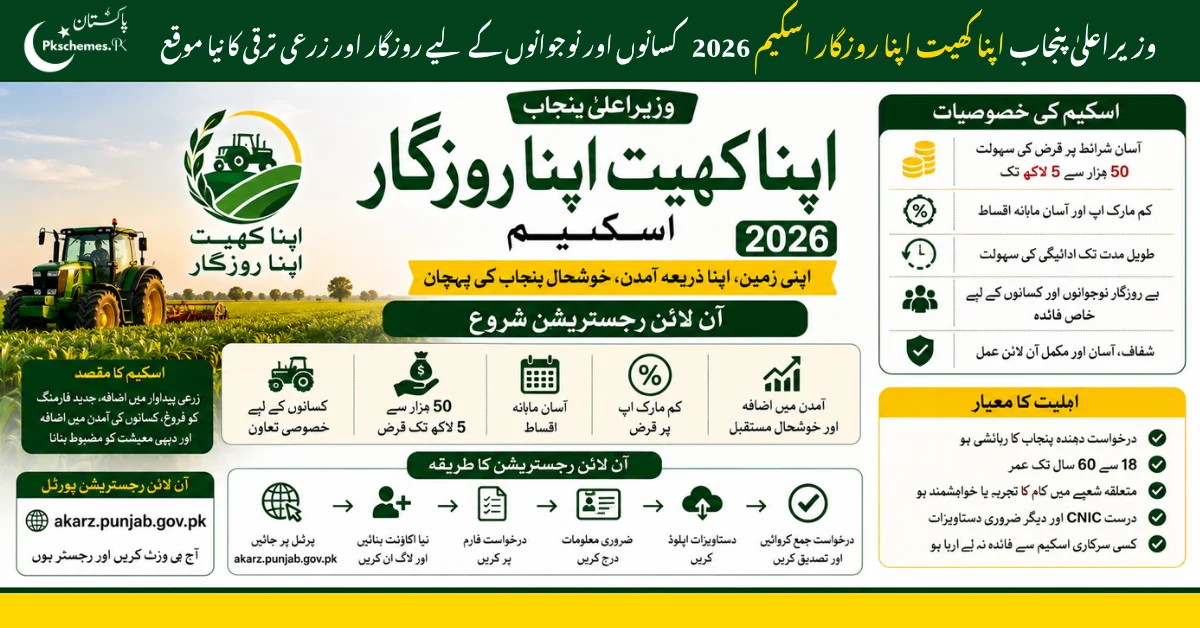
Apna Khet Apna Rozgar Scheme 2026 – Eligibility, Registration & Complete Guide
The Apna Khet Apna Rozgar Scheme 2026 is a Punjab Government initiative focused on creating agricultural livelihood opportunities for eligible people who have limited or no access to agricultural land.
The programme is particularly relevant to rural residents and landless applicants who want to build a source of income through agriculture. The official AKAR portal provides the application system, eligibility-related information and the schedule for the selection process.
For the 2026 phase, applications were received from May 2 to May 20, 2026. Applicants who submitted their forms can now follow the selection and result process through the official channels.
What is Apna Khet Apna Rozgar Scheme 2026?
Apna Khet Apna Rozgar, commonly referred to as AKAR, is an agricultural livelihood initiative of the Punjab Government. Rather than being a conventional cash-loan programme, the scheme is connected with agricultural land opportunities and related support for eligible applicants.
The programme is intended to provide a pathway for people who have an interest in agriculture but do not have adequate access to farmland.
Read More: Wazir Azam Apna Ghar Scheme 2026 – Loan, Eligibility & Online Apply
Who is the Scheme For?
The programme is primarily relevant to applicants from rural Punjab who meet the applicable land and residency conditions.
Potential applicants may include:
- Landless rural residents
- Landless tenants
- Small farmers
- People with agricultural experience
- Applicants meeting the government’s land-allocation conditions
Eligibility is determined according to the official programme rules. Meeting one general condition does not automatically guarantee selection.
Basic Eligibility Requirements
Applicants should check the current official conditions before relying on any eligibility list. The key requirements include:
- Punjab residency
- Valid CNIC
- Compliance with the applicable land-allocation criteria
- Fulfilment of the programme’s other conditions
- Any additional verification required by the relevant government authorities
Certain categories of people may be excluded under the programme rules, so applicants should verify their individual circumstances through the official AKAR system.
Read More: PAVE Scheme 2026 – Eligibility, Electric Bike Subsidy & Online Apply
How to Apply for Apna Khet Apna Rozgar Scheme
The AKAR programme uses an online application system.
Step 1: Visit the AKAR Portal
- Open the official Apna Khet Apna Rozgar portal and access the applicant section.
Step 2: Create or access your account
- Use the registration or login option available on the portal.
Step 3: Enter CNIC information
- Provide your CNIC and the other personal information requested by the system.
Step 4: Complete the application
- Enter your residential, family and other required information accurately.
Step 5: Provide land-related information
- Where requested, provide accurate information concerning your land or agricultural status.
Step 6: Review the form
- Check your information carefully before submission.
Step 7: Submit the application
- Submit the completed application through the official portal and keep your application details for future reference.
2026 Application Schedule
The official AKAR portal lists the following schedule for the 2026 application process:
| Activity | Date |
|---|---|
| Application submission | May 2–20, 2026 |
| Preliminary applicants list | May 21, 2026 |
| Tehsil Monitoring Committee scrutiny | May 22–June 6, 2026 |
| Appeal to District Collector | June 11–18, 2026 |
| District Collector decision | June 19–30, 2026 |
| Final eligible applicants list | July 2, 2026 |
| Computerized balloting | July 6, 2026 |
The dates shown on the official portal are subject to change where the government revises the programme schedule.
What Happens After Application Submission?
Submitting an application does not mean that an applicant has automatically been selected.
The programme follows several stages, including:
- Preliminary applicant listing
- Scrutiny by the Tehsil Monitoring Committee
- Appeal process
- District-level decision
- Final eligible applicant list
- Computerized balloting
This process means applicants should monitor official updates rather than assuming that submission itself confirms allocation.
Read More: Prime Minister Youth Loan Scheme 2026 – Eligibility, Loan Amount & Online Registration
Is Apna Khet Apna Rozgar a Loan Scheme?
It should not be treated as an ordinary Punjab Government loan scheme. The main concept of AKAR is linked to agricultural land opportunities and livelihood generation, rather than simply providing applicants with a cash loan.
Applicants should therefore read the official allocation and programme conditions carefully before assuming that the scheme provides free ownership of agricultural land.
Is the Land Given Free of Cost?
Applicants should be careful with the term “free land.” The exact rights, conditions, tenure and obligations associated with any land allocation are governed by the government’s applicable rules and programme terms.
Selection through the programme does not mean applicants should automatically assume unrestricted ownership of the land.
What Documents May Be Required?
Applicants should keep their basic information ready, including:
- CNIC
- Punjab residency information
- Contact number
- Residential details
- Land ownership or land-status information
- Family-related information where required
- Any other documents requested by the official application system
The final document requirements should always be confirmed from the official AKAR portal.
What Should Applicants Do After Applying?
If you already submitted an application in the 2026 phase, avoid submitting a duplicate application simply because you have not received an update.
Instead:
- Keep your application information safe
- Check the official applicant or result information
- Review the final eligible list
- Check the computerized balloting result
- Follow further instructions if selected
- Contact the relevant official department if clarification is required
Read More: CM Punjab Green Credit Program 2026 – Registration, Cycling Reward & Green Credits
AKAR Official Portal
The official Apna Khet Apna Rozgar portal provides the application’s login system and programme schedule.
https://akar.pulse.gop.pk/login
Applicants should use the official portal rather than relying on social media posts or unofficial registration websites.
Final Words
The Apna Khet Apna Rozgar Scheme 2026 is designed around agricultural livelihood opportunities for eligible applicants in Punjab, particularly people who have limited access to agricultural land.
The 2026 application phase has already moved beyond registration, so applicants who submitted their forms should now focus on the scrutiny, final eligibility and balloting stages.
For any future phase, applicants should confirm the opening and closing dates directly from the official AKAR portal before submitting an application.